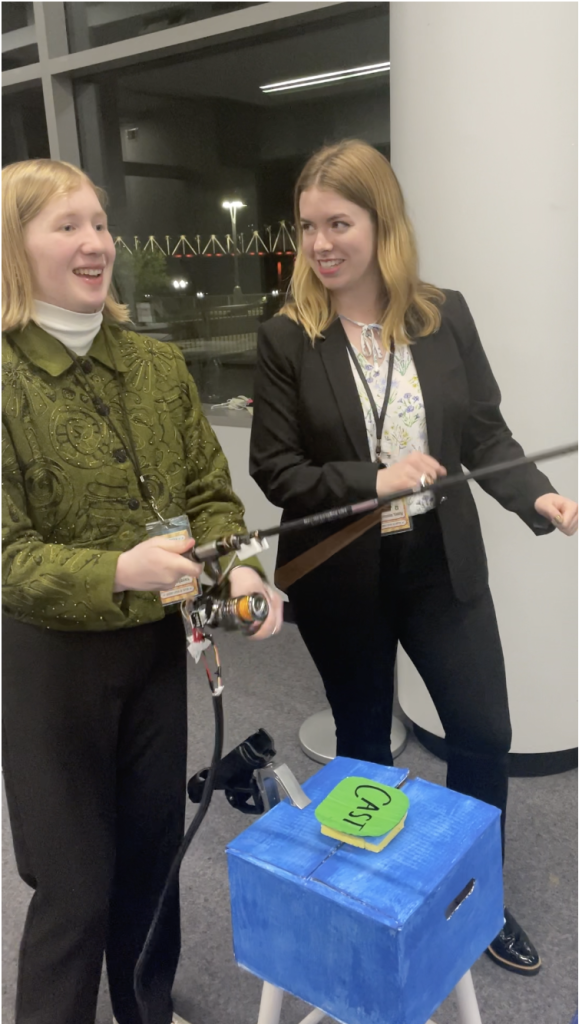
Ferryman Fishing is an alternate controller experience. It was made by a student-run team and showcased at FUSE 2024.
01.
Introduction
FUSE is the Bradley University Interactive Media Department’s end-of-year student showcase. This takes the form of a two-day museum exhibition at the Peoria Riverfront Museum. This year, I decided to join a game design team. Because of my past leadership experience I was given the role of Design & Art Lead. Our game, Ferryman Fishing, is an alternative controller experience. In the game, you catch fish on the River Styx using a real fishing rod.
02.
About the Client
FUSE always hosts student-made projects. So, while we were going to be at the Peoria Riverfront Museum, we weren’t designing for a board of directors. Instead, we had the exciting opportunity to design for the public. The event is always attended by families and community members. So, we had to create an experience that would be fun for kids, their grandparents, industry professionals, and everyone in between.
03.
Challenges
There were a lot of challenges developing Ferryman Fishing. Even though I was the Art and Design Lead, it is such a collaborative environment and I worked with other positions to solve problems.
Firstly, making our own controller. We weren’t using a game controller, we were making one oout of sensors, a monitor, and a real fishing rod.
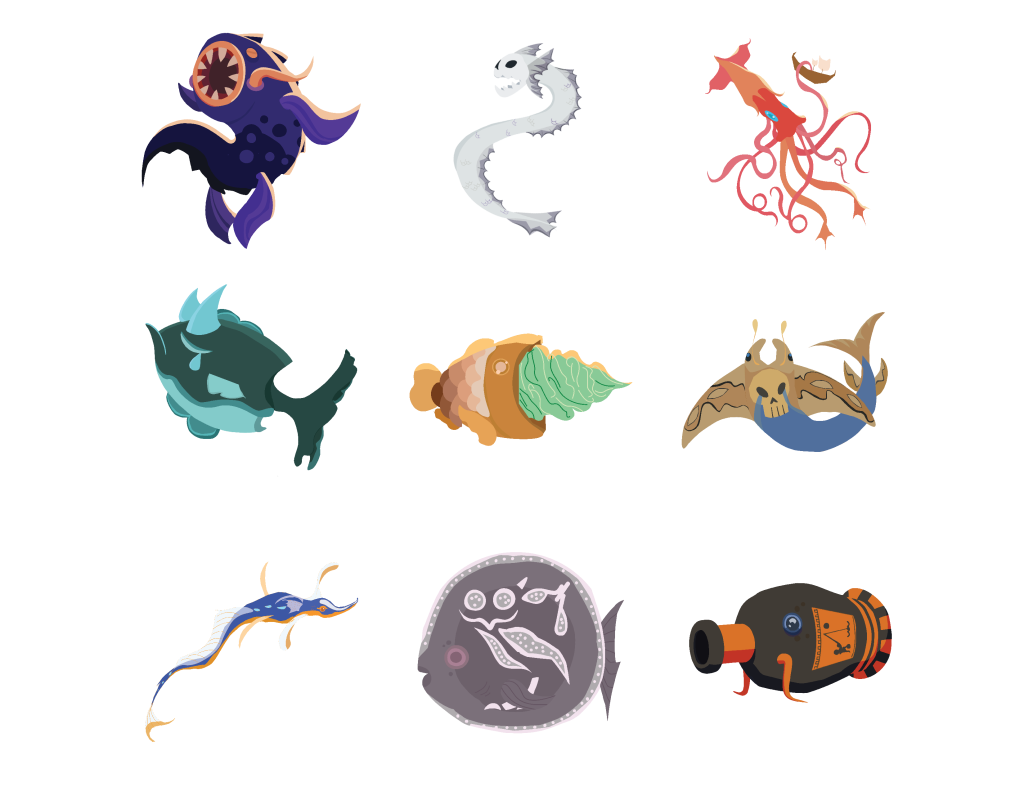
Secondly, making sure all of the art assets worked within the context of the game. How do you design “monstrous” fish inspired by Greek mythology, without creating something too scary for kids?
Thirdly, we didn’t have an animator. How could we have our art assets move on screen without a dedicated animator?
04.
Solutions
The most difficult challenge, building a controller from scratch, was handled by the amazing engineering and programming teams (we are the first and only FUSE team with engineers). I supported these teams with my UX knowledge, pointing out things we should include to make the design as accessible as possible. For example, I suggested having a step stool so that shorter people would be able to use the mounted fishing pole. Its a small detail, but is very important for the gameplay to be fun for all.
My team was responsible for art and UI assets. There were a few things I had to do. First, I created a design system with fonts, colors, and design guidelines and encouraged my team to find reference images for their art pieces to be consistent across the board. I also talked with the game designers to find out what they would need for UI. I had to keep an Asana board and figure out the priorities for assets (what did our team need? What did the production team need? What could be delayed, and what needed to be done?) I lead weekly design meetings where I gave feedback and assigned tasks. And, of course, I made a lot of assets myself.
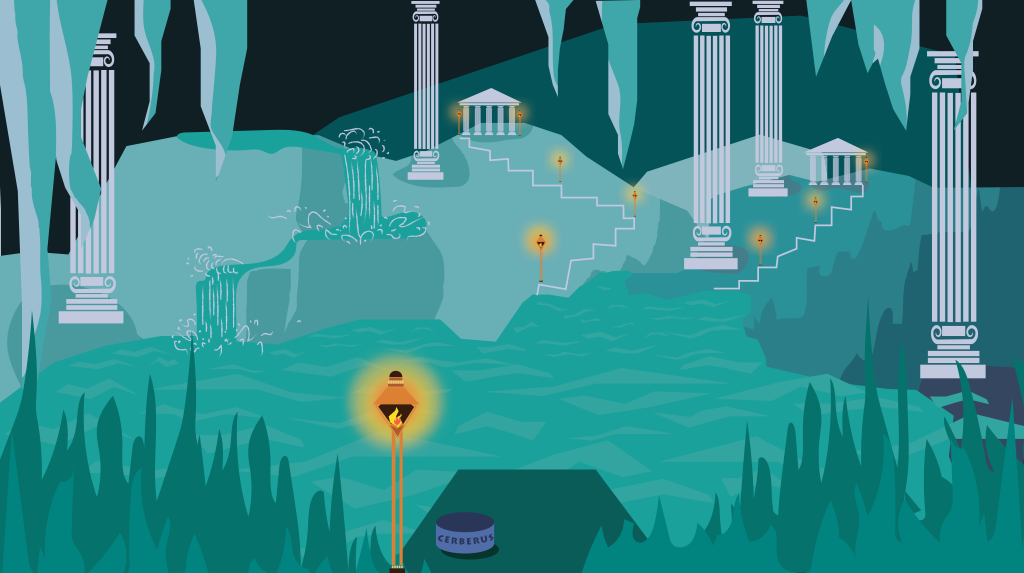
The biggest problem for art was that we didn’t have an animator. Games need things to move around on screen to be immersive and fun to look at. So, I took it upon myself to learn about motion design. I used After Effects for the first time in years. After a lot of trial and error, I was able to develop enough skill to get the background animation finished. I felt pretty proud of my new skill as a motion designer. But, when I knew I didn’t have the skills to complete certain animations, I reached out to the animation department. I pitched the game to different students, until one talented animator agreed to help. I talked with her outside of team meetings and guided her on what we needed, and she knocked it out of the park.
05.
Results
We had around 2,500 people attend FUSE from April 19th to 20th, 2024. Community members of all ages, families, professional designers, representatives from game design companies, and students were able to play Ferryman Fishing.
Across all these groups, the game received very positive feedback. Representatives from the game studio Undead Labs called the art & UI “the most professional out of any 2-D FUSE project.”
01. Introduction
FUSE is the Bradley University Interactive Media Department’s end-of-year student showcase. This takes the form of a two-day museum exhibition at the Peoria Riverfront Museum. This year, I decided to join a game design team. Because of my past leadership experience I was given the role of Design & Art Lead. Our game, Ferryman Fishing, is an alternative controller experience. In the game, you catch fish on the River Styx using a real fishing rod.
02. About the Client
FUSE always hosts student-made projects. So, while we were going to be at the Peoria Riverfront Museum, we weren’t designing for a board of directors. Instead, we had the exciting opportunity to design for the public. The event is always attended by families and community members. So, we had to create an experience that would be fun for kids, their grandparents, industry professionals, and everyone in between.
03. Challenges
There were a lot of challenges developing Ferryman Fishing. Even though I was the Art and Design Lead, it is such a collaborative environment and I worked with other positions to solve problems.
Firstly, making our own controller. We weren’t using a game controller, we were making one oout of sensors, a monitor, and a real fishing rod.
Secondly, making sure all of the art assets worked within the context of the game. How do you design “monstrous” fish inspired by Greek mythology, without creating something too scary for kids?
Thirdly, we didn’t have an animator. How could we have our art assets move on screen without a dedicated animator?
04. Solutions
The most difficult challenge, building a controller from scratch, was handled by the amazing engineering and programming teams (we are the first and only FUSE team with engineers). I supported these teams with my UX knowledge, pointing out things we should include to make the design as accessible as possible. For example, I suggested having a step stool so that shorter people would be able to use the mounted fishing pole. Its a small detail, but is very important for the gameplay to be fun for all.
My team was responsible for art and UI assets. There were a few things I had to do. First, I created a design system with fonts, colors, and design guidelines and encouraged my team to find reference images for their art pieces to be consistent across the board. I also talked with the game designers to find out what they would need for UI. I had to keep an Asana board and figure out the priorities for assets (what did our team need? What did the production team need? What could be delayed, and what needed to be done?) I lead weekly design meetings where I gave feedback and assigned tasks. And, of course, I made a lot of assets myself.
The biggest problem for art was that we didn’t have an animator. Games need things to move around on screen to be immersive and fun to look at. So, I took it upon myself to learn about motion design. I used After Effects for the first time in years. After a lot of trial and error, I was able to develop enough skill to get the background animation finished. I felt pretty proud of my new skill as a motion designer. But, when I knew I didn’t have the skills to complete certain animations, I reached out to the animation department. I pitched the game to different students, until one talented animator agreed to help. I talked with her outside of team meetings and guided her on what we needed, and she knocked it out of the park.
05. Results
We had around 1,000 people attend FUSE from April 19th to 20th, 2024. Community members of all ages, professional designers, representatives from game design companies, and students were able to play Ferryman Fishing. Across all these groups, the game received very positive feedback.