
UX Capstone
The final project undertaken by Bradley University’s UX Design seniors to teach those unfamiliar with design what we do. Over the course of a year, we created a one of a kind multimedia installation showcased at the Peoria Riverfront Museum.
01.
Introduction
Each year, the senior UX Design majors work on their capstone project. This project was the culmination of everything I learned during undergrad, and it put my team and I to the test. We demonstrated what User Experience is and why it’s essential through student projects, supersized print displays, touchscreens, sculpture pieces, and more.
02.
About the Project
Capstone projects are an important part of any senior year. Before my senior year, UX Capstone looked very different. Seniors mostly worked on their individual portfolios and displayed them at FUSE, Bradley University’s end of year student showcase at the Peoria Riverfront Museum. I decided to throw this idea out the window.
I wanted to create an engaging exhibit that actually taught people what design is, what designers do, and why good design is crucial for everyone. I worked as a designer, but I also became the team lead, and the rest of my cohort courageously went along with my crazy new idea.
Instead of just designing screens, I wanted to showcase why design was important across a wide range of mediums. What tied each component together was interactivity and visual delight.
03.
Challenges
The exciting thing about this project is the same thing that made it difficult: trying something new. I was designing and leading a team on a project that had never been done before, with dozens of moving parts and an expectation that I would know what to do. A few of the challenges we faced included:
- Scope. Everyone was excited about designing the exhibit, and that excitement led to a lot of ambitious ideas. Several ideas had to be scrapped, but the project still had a very large scope, covering everything from printed handouts to Figma prototypes.
- Staying On Time and Sharing Responsibility. With so many different components, the hard deadline of April 24th (FUSE Day) was a little scary. We didn’t have much room for error or constant iteration, our project had to be out the door in two semesters or it wouldn’t happen at all. With seven designers working together, we had to figure out a way to divide the work and get everyone working simultaneously and efficiently.
- Unfamiliarity. There were lots of aspects of the project I was familiar with. Using Figma, using core design principles, etc. But there were many more parts I was unfamiliar with. I wanted to add a physical, interactive sculpture made of recycled materials to the exhibit. But, I didn’t know the first thing about dismantling a TV or rewiring electronics or how to create the piece that existed only in my imagination.
- Getting That Research. Our work was going to be showcased at the Peoria Riverfront Museum, which meant that it was going to be seen by people from age five to eighty-five. We were college students, operating on a college campus, and most of our user testing was done on our professors and fellow students. We had to make assumptions about what would resonate with kids and older adults.
04.
Solutions
This project was a challenge. The monumental amount of work we had to accomplish in a relatively short amount of time was daunting. But the work was always fun, because it was so unique and everyone working on it cared deeply about it. It was our chance to get creative without limitation. I wouldn’t have been able to pull it off without the hard work and passion of all of my team members, their designs consistently exceeded my expectations.
Using task management tools like Google Sheets and Trello, we were able to divide up work successfully. We also met frequently to brainstorm ideas, and make sure we had a consistent design guide we all found aesthetically appealing.
I also met with outside experts, from computer engineering students to sculpture professors, to create the physical elements. Through iteration, we could fine tune the project more than I ever expected and create something we could truly be proud of.
05.
Results
The project eventually took the form of four smaller components coming together. By dividing up responsibilities, we were able to create everything we wanted. These included:
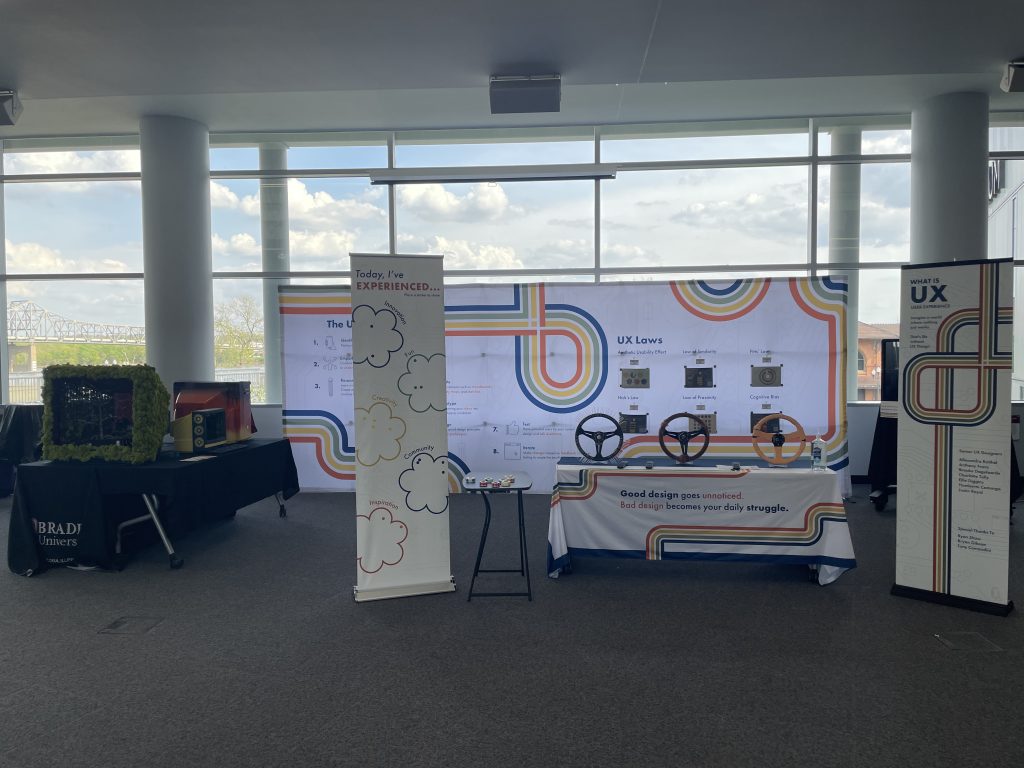
- Large informational banners showcasing the UX Process and important UX Laws (which people could take home).
- A series of tappable screens made in Figma showcasing student work and ways UX applied to a variety of industries. You can see our Figma project here.
- A few intentionally unusable designs. As we said at one of our tables, “good design goes unnoticed. Bad design becomes your daily struggle.” We took three steering wheels and made them impossible to touch by adhering uncomfortable materials to them. People understood the importance of good design by feeling what bad design.
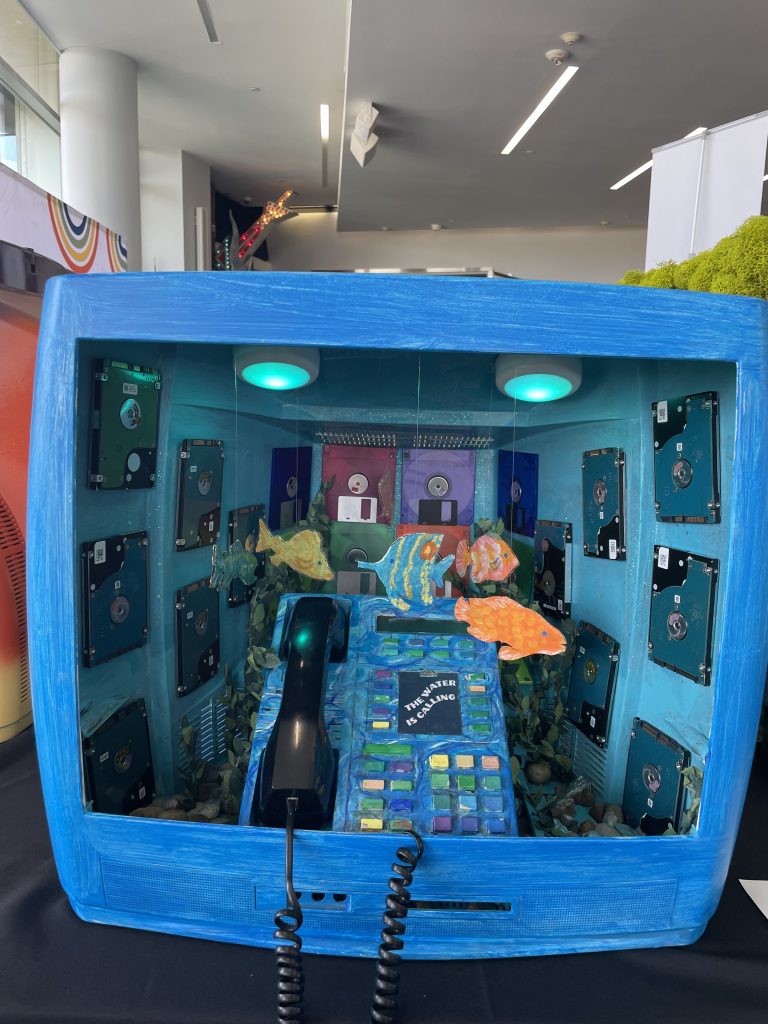
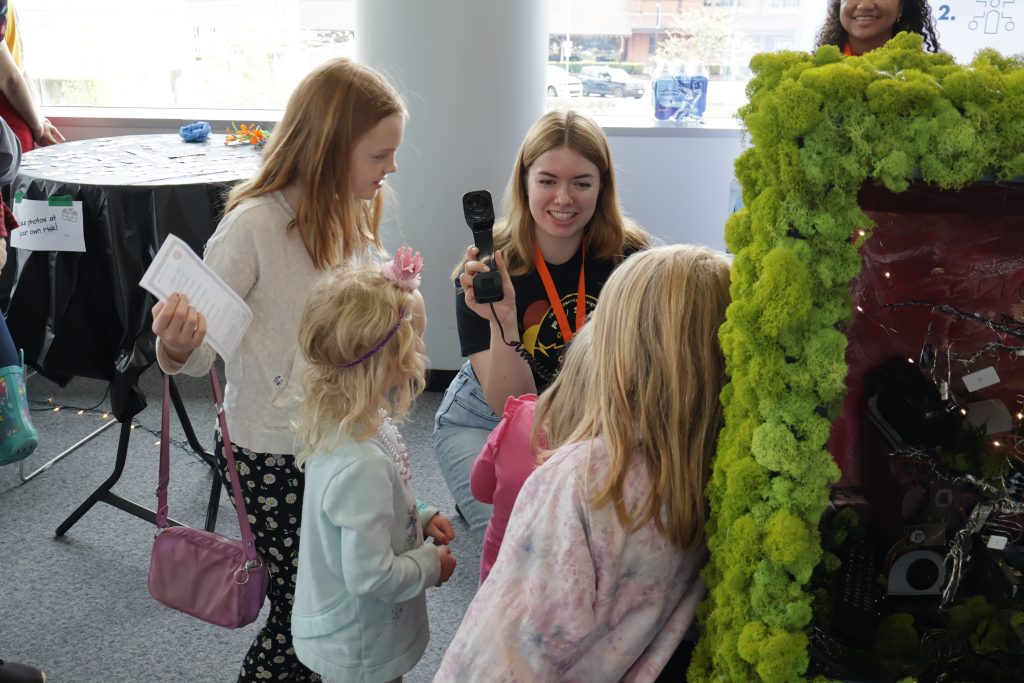
- My personal favorite aspect, interactive sculptures made from recycled materials. The goal of these sculptures was to get people to reach out and touch, listen, and see, while getting them to reflect on the relationship between technology and the world around them. UX doesn’t just exist on a flat screen, it’s the environment around you. I made a sculpture inspired by an aquatic environment, where you could “hear the ocean” by picking up a retooled vintage computer.
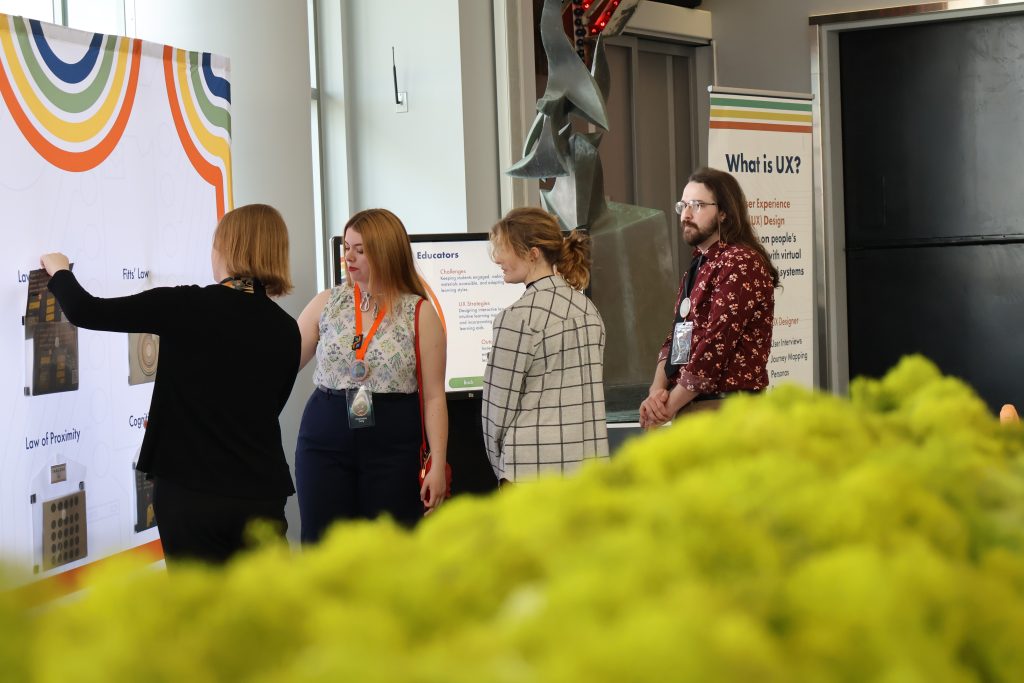
Over the course of three days, we displayed our work at FUSE, and people were consistently blown away. My expectations were exceeded. The public reaction was incredible, as people of all ages and backgrounds were drawn in, and professionals in the UX industry complimented our work.
I am proud of this ambitious project, and the lessons I learned as a designer and leader will stay with me.
01. Introduction
Each year, the senior UX Design majors work on their capstone project. This project was the culmination of everything I learned during undergrad, and it put my team and I to the test. We demonstrated what User Experience is and why it’s essential through student projects, supersized print displays, touchscreens, sculpture pieces, and more.
02. About the Client
Capstone projects are an important part of any senior year. Before my senior year, UX Capstone looked very different. Seniors mostly worked on their individual portfolios and displayed them at FUSE, Bradley University’s end of year student showcase at the Peoria Riverfront Museum. I decided to throw this idea out the window.
I wanted to create an engaging exhibit that actually taught people what design is, what designers do, and why good design is crucial for everyone. I worked as a designer, but I also became the team lead, and the rest of my cohort courageously went along with my crazy new idea.
Instead of just designing screens, I wanted to showcase why design was important across a wide range of mediums. What tied each component together was interactivity and visual delight.
03. Challenges
The exciting thing about this project is the same thing that made it difficult: trying something new. I was designing and leading a team on a project that had never been done before, with dozens of moving parts and an expectation that I would know what to do. A few of the challenges we faced included:
- Scope. Everyone was excited about designing the exhibit, and that excitement led to a lot of ambitious ideas. Several ideas had to be scrapped, but the project still had a very large scope, covering everything from printed handouts to Figma prototypes.
- Staying On Time and Sharing Responsibility. With so many different components, the hard deadline of April 24th (FUSE Day) was a little scary. We didn’t have much room for error or constant iteration, our project had to be out the door in two semesters or it wouldn’t happen at all. With seven designers working together, we had to figure out a way to divide the work and get everyone working simultaneously and efficiently.
- Unfamiliarity. There were lots of aspects of the project I was familiar with. Using Figma, using core design principles, etc. But there were many more parts I was unfamiliar with. I wanted to add a physical, interactive sculpture made of recycled materials to the exhibit. But, I didn’t know the first thing about dismantling a TV or rewiring electronics or how to create the piece that existed only in my imagination.
- Getting That Reserach. Our work was going to be showcased at the Peoria Riverfront Museum, which meant that it was going to be seen by people from age five to eighty-five. We were college students, operating on a college campus, and most of our user testing was done on our professors and fellow students. We had to make assumptions about what would resonate with kids and older adults.
04. Solutions
This project was a challenge. The monumental amount of work we had to accomplish in a relatively short amount of time was daunting. But the work was always fun, because it was so unique and everyone working on it cared deeply about it. It was our chance to get creative without limitation. I wouldn’t have been able to pull it off without the hard work and passion of all of my team members, their designs consistently exceeded my expectations.
Using task management tools like Google Sheets and Trello, we were able to divide up work successfully. We also met frequently to brainstorm ideas, and make sure we had a consistent design guide we all found aesthetically appealing.
I also met with outside experts, from computer engineering students to sculpture professors, to create the physical elements. Through iteration, we could fine tune the project more than I ever expected and create something we could truly be proud of.
05. Results
The project eventually took the form of four smaller components coming together. By dividing up responsibilities, we were able to create everything we wanted. These included:
- Large informational banners showcasing the UX Process and important UX Laws (which people could take home).
- A series of tappable screens made in Figma showcasing student work and ways UX applied to a variety of industries. You can see our Figma project here.
- A few intentionally unusable designs. UX Design can be hard to understand, and when it’s done well, it goes unseen. As we said at one of our tables, “good design goes unnoticed. Bad design becomes your daily struggle.” We took three steering wheels and made them impossible to touch by adhering uncomfortable materials to them. People understood the importance of good design by seeing what bad design leads to.
- My personal favorite aspect, interactive sculptures made from recycled materials. The goal of these sculptures was to get people to reach out and touch, listen, and see, while getting them to reflect on the relationship between technology and the world around them. UX doesn’t just exist on a flat screen, it’s the environment around you. I made a sculpture inspired by an aquatic environment, where you could “hear the ocean” by picking up a retooled vintage computer.
Over the course of three days, we displayed our work at FUSE, and people were consistently blown away. My expectations were exceeded in every possible way. The public reaction was incredible, as people of all ages and backgrounds were drawn in, and professionals in the UX industry complimented our work.
I am proud of this ambitious project, and the lessons I learned as a designer and leader have stayed with me.
